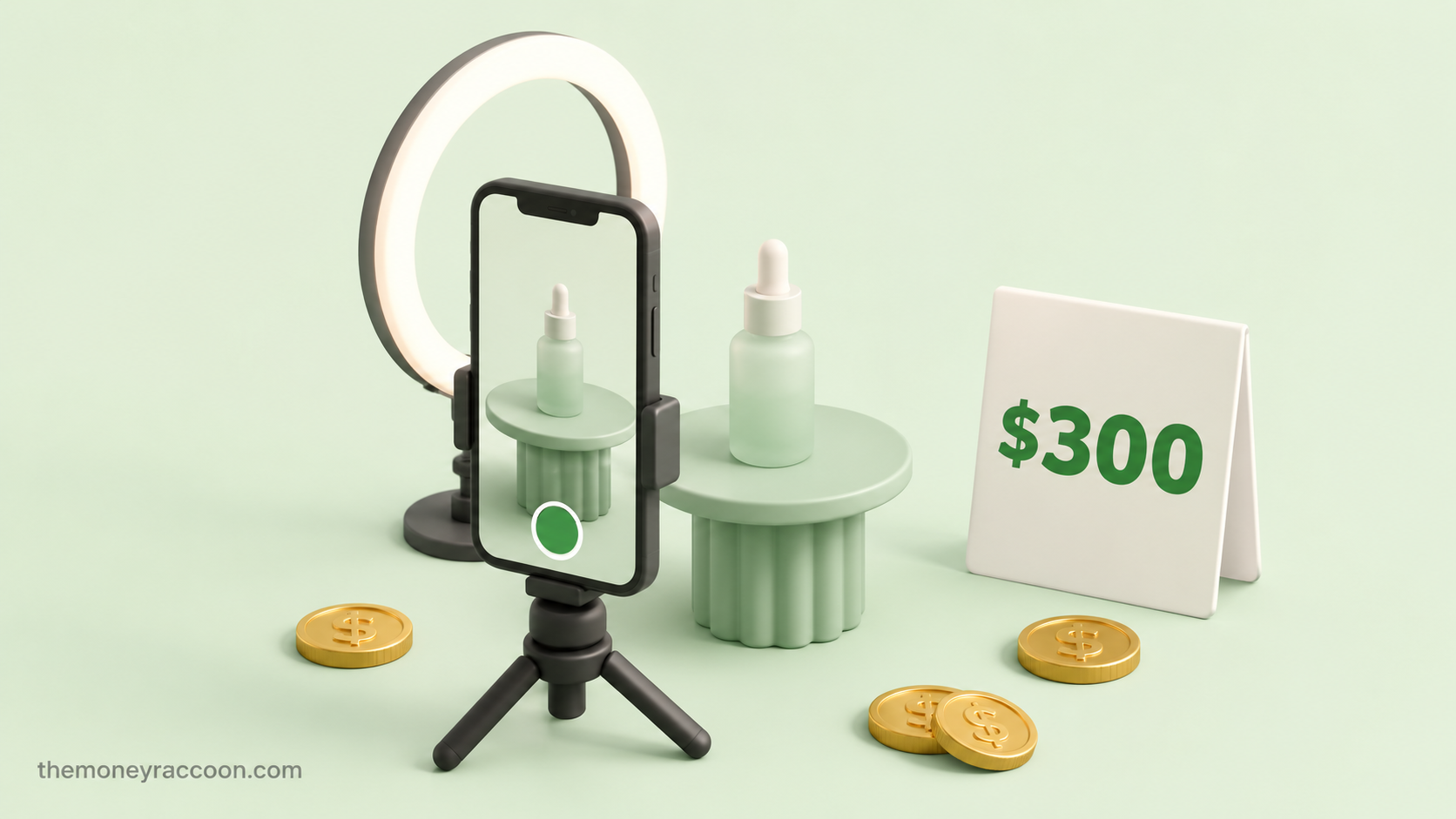
Here’s the part that breaks people’s brains when they first learn how to become a UGC creator: you don’t need a single follower. Not one. No viral videos, no blue checkmark, no “personal brand.” Brands will pay you $150 to $500 for a phone video that never even posts to your own account.
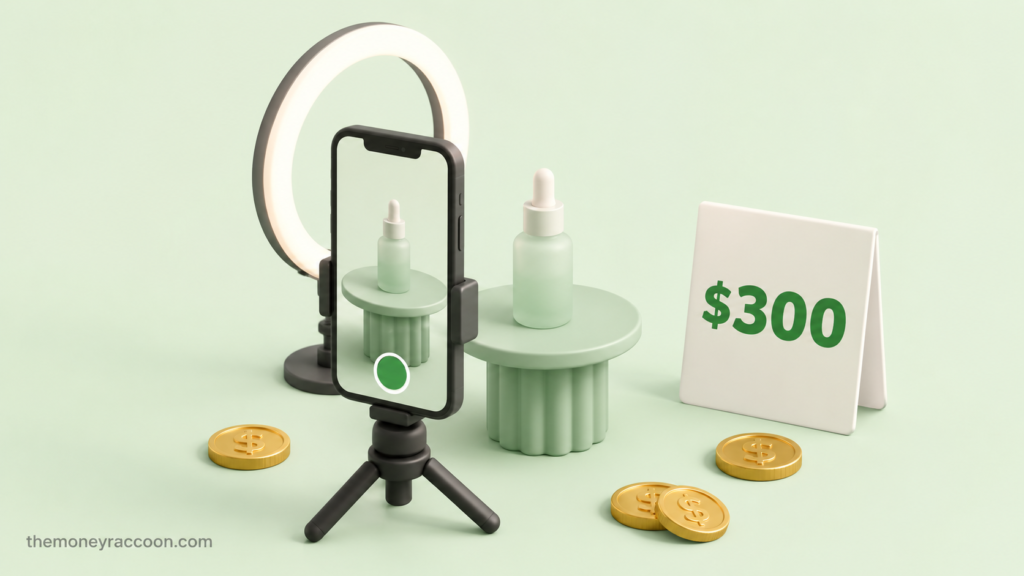
That’s because UGC — user-generated content — isn’t influencing. You’re not selling your audience. You’re selling a skill: making authentic, scroll-stopping product videos that brands then run as their own ads. It’s freelance video production disguised as a side hustle, and the demand in 2026 is enormous while the supply of people who understand it is still small.
This is the plain-English guide: what UGC actually is, what it really pays, and the exact six steps from “I have a phone” to “I have my first paid brand deal.”
In plain terms: A UGC (user-generated content) creator makes authentic product videos that brands use in their own ads — no personal audience required. Beginners charge $150–300 per video; experienced creators $400–800+. You need a smartphone, decent lighting, and a small portfolio of practice videos. The path: create samples, build a rate card, and email 20–30 brands a week until one says yes.
What UGC Actually Is (and Isn’t)
The confusion is the opportunity, so let’s kill it fast.
An influencer is paid for their audience. A brand pays them to post to their followers. No followers, no deal.
A UGC creator is paid for their content. You film a product video — unboxing, demo, “get ready with me” style — and hand the raw file to the brand. They post it, on their account or as a paid ad. Your follower count is irrelevant because your videos never touch your own profile.
You’re essentially a freelance micro-videographer. The brand isn’t buying reach — they’re buying production skill and authenticity, the “real person” feel that polished studio ads can’t fake. That’s why a stay-at-home parent with a private Instagram and zero followers can out-earn an influencer with 50,000: the influencer sells eyeballs, you sell a craft.
What UGC Really Pays in 2026
Real numbers, because vague promises help nobody:
| Creator Level | Per Video (Single Deliverable) | Notes |
|---|---|---|
| Beginner (0–1 yr) | $150–300 | Your first paid deals live here |
| Intermediate (1–3 yr) | $400–800 | Repeat clients, better editing |
| By platform: TikTok | $25–250+ | Shorter = often lower |
| By platform: Instagram | $50–500+ | The UGC sweet spot |
| By platform: YouTube | $100–1,000+ | Longer form, higher pay |
Beginner creators typically charge $150–300 per single video, and the math scales fast: land four $250 deals a month and that’s $1,000 in side income from your phone. Full-time creators regularly report $3,000–10,000+/month — not because they went viral, but because they treated it like the freelance business it is.
Add-ons stack the rate: usage rights (brand runs it as a paid ad longer), extra edits, hooks/variations, and raw footage all command more. A “$250 video” often becomes a $400 package once you learn what to charge for.
How to Become a UGC Creator: 6 Steps to Your First Deal
Step 1: Master the gear you already own. Your smartphone is enough. What actually matters: good lighting (a $15 ring light or a window), clean audio (film in a quiet room), and steady shots (a $20 tripod). Brands want authentic, not Hollywood — over-production actually hurts the “real person” feel.
Step 2: Learn the formats that sell. The UGC workhorses: unboxings, “3 reasons I love this,” problem/solution demos, and get-ready-with-me style. Study the ads already running on TikTok and Instagram — those are your templates. Recreate them with products you own.
Step 3: Build a portfolio with products from your own house. This is the unlock beginners miss: you don’t wait for brands to hire you to make samples. Film 3–5 polished videos for products you already have (skincare, a snack, a gadget). That’s your portfolio. No client required to start.
Step 4: Set a simple rate card. One page: your rates ($150–300 to start), what’s included (one video, one revision), and add-on pricing (usage rights, extra edits). Having it ready makes you look professional and speeds up every deal.
Step 5: Pitch relentlessly. The numbers game that works: email 20–30 brands a week — small direct-to-consumer brands that already advertise on Instagram/TikTok are the sweet spot. Short pitch: who you are, a portfolio link, and one specific content idea for their product. Also list yourself on UGC marketplaces (Billo, JoinBrands, Insense) where brands come to you.
Step 6: Deliver, then rebook. Nail the first deal — on time, on brief, easy to work with — and the same brand rebooks. Repeat clients are where UGC stops being a hustle and becomes income. One happy brand is worth 100 cold emails.
The Honest Part
UGC is real income, not a lottery ticket. Two truths that separate the people who make it from the people who quit:
It’s a business, not a vibe. The creators earning $3k+/month send pitches every single week, track their deals, and treat clients like a freelancer treats clients. The ones who post one video and wait get nothing.
The first deal is the hard one. Going from zero to your first paid brand takes weeks of pitching and rejection — normal, and the exact filter that keeps the field small enough to be lucrative. After the first “yes,” referrals and rebookings compound. If you need cash this week while you build it, UGC isn’t that — here’s the same-day playbook and the weekly-pay online jobs to bridge the gap.
FAQ: How to Become a UGC Creator
- Do you need followers to be a UGC creator? No — that’s the entire point of UGC. Brands buy your content to run on their accounts and ads, not your audience. Your follower count is irrelevant; your ability to make authentic, engaging product videos is what you’re paid for.
- How much do beginner UGC creators make? $150–300 per video is the standard starting range in 2026. Land a few deals a month and that’s $600–1,200 in side income; go full-time with consistent pitching and $3,000–10,000+/month is realistic. Add-ons like usage rights and extra edits push rates higher.
- What equipment do I need to start UGC? Just a smartphone, decent lighting (a window or a cheap ring light), a quiet room for clean audio, and a $20 tripod. Brands specifically want the authentic, “filmed by a real person” look — expensive gear can actually work against you.
- How do I get my first UGC client with no experience? Build a portfolio first using products you already own (film 3–5 sample videos), create a one-page rate card, then email 20–30 small DTC brands a week plus list yourself on UGC marketplaces (Billo, JoinBrands, Insense). Persistence is the whole game.
- Is being a UGC creator worth it in 2026? For people willing to treat it as a freelance business, yes — demand from brands is high and rising, the barrier to entry is a phone, and there’s no follower requirement. It’s not passive or instant, but it’s one of the few “content” income streams open to complete beginners.
Sources: JoinBrands — UGC creator rates 2026, UGC Roster — Real rates by platform, Fueler — UGC creator pricing guide 2026

Personal finance writer, founder and editor of The Money Raccoon — 5 years in the industry and 1,000+ articles published in the finance niche. I turn complex money rules — credit scores, debt, banking and investing — into plain-English guides backed by primary sources and real numbers. Every guide here is fact-checked against the institutions that publish the data and updated when the numbers change.