
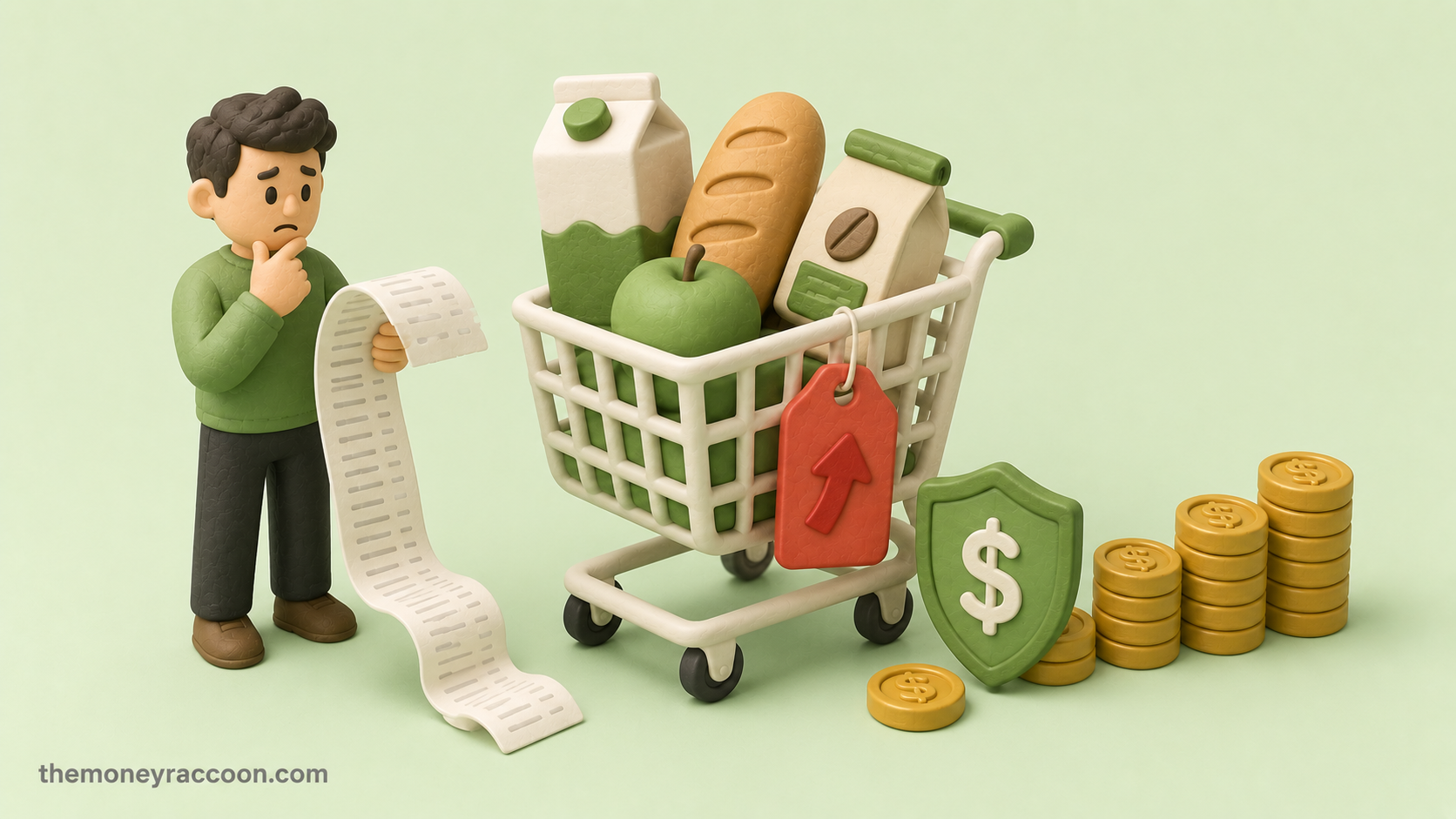
If you’ve stood in a checkout line wondering why are groceries so expensive lately, the answer isn’t your imagination — and it isn’t just “inflation” either. Beef is up more than 12% year over year, coffee has jumped nearly 20%, and the average American household is now absorbing over $2,500 a year in tariff-related costs — much of it hiding inside the grocery bill.
What makes 2026 different from the price spikes of a few years ago is why it’s happening. This round isn’t a temporary supply-chain hiccup that resolves on its own: it’s a stack of structural forces — trade policy, climate-hit harvests, fuel costs, and labor shortages — that don’t resolve on a short timeline. Which means waiting it out is not a strategy.
Fighting back is. This guide breaks down the five real causes (so you know which prices might ease and which won’t), the specific items driving your bill up, and the nine tactics that reliably claw back $200+ a month without eating worse.
Short version: Groceries are so expensive in 2026 because five forces are stacking: (1) tariffs on imported food — including 25% on Mexican produce — costing households $2,500+/year, (2) climate-driven crop failures hitting coffee, beef and produce, (3) higher fuel costs raising transport prices on everything, (4) labor shortages across farming and processing, and (5) lingering inflation in packaging and production. Best defenses: buy what’s NOT spiking (store brands, frozen produce, alternative proteins), plan around sales, and stack cashback apps.
Why Are Groceries So Expensive: The 5 Real Causes
1. Tariffs turned the border into a markup. Fresh produce from Mexico — tomatoes, avocados, limes, bell peppers — faces 25% tariffs, and import taxes ripple through coffee, seafood, and packaged goods. Importers pay the tax, then pass it to the shelf price. This is deliberate policy, not a glitch — these prices stay up as long as the tariffs do.
2. Climate wrecked specific harvests. Droughts shrank US cattle herds (hence beef +12%), and poor growing seasons in coffee-producing regions sent coffee up nearly 20%. Extreme weather is now a structural driver of food inflation, hitting one category hard at a time — this year it’s beef, coffee, lettuce, candy (cocoa) and canned fruit.
3. Fuel costs ride along with every truck. Higher fuel prices have a knock-on effect across groceries, because every item on every shelf traveled to get there — some retailers now pass this through as explicit surcharges.
4. Labor is short from farm to shelf. Farms, processing plants and distribution all pay more to stay staffed, and those wages are baked into prices permanently — wages don’t roll back.
5. The old inflation never fully left. Packaging, insurance, energy and equipment all cost more than pre-2022, so even “stable” categories sit on a higher base. That’s why the bill feels heavy even in months when the headline inflation number looks calm.
The strategic takeaway: causes 1 and 2 are category-specific — which means the smart response isn’t buying less food, it’s buying different food.
What’s Actually Driving Your Bill Up
| Item | What’s Happening | The Swap That Saves |
|---|---|---|
| Beef | Up 12%+ (shrunken herds) | Chicken, pork, beans, eggs — same protein, fraction of the price |
| Coffee | Up ~20% (failed harvests) | Store-brand beans; brew at home (a $6 latte habit is $180/mo) |
| Fresh produce (imported) | 25% tariffs on Mexican imports | Frozen produce — same nutrition, no tariff premium, zero waste |
| Candy & chocolate | Cocoa shortage | Bake at home; buy post-holiday clearance |
| Canned fruit | Tariffs + packaging costs | Frozen fruit or in-season fresh |
| Lettuce | Weather-hit growing regions | Cabbage, spinach, in-season greens |
The pattern: almost every spiking item has a calm neighbor on the same aisle. Households that swap within categories are quietly beating food inflation; households that buy the same basket every week are funding it.
9 Ways to Fight Back (Stack Them)
1. Switch to store brands — the 25% instant discount. Same factories produce many name-brand and private-label items; the label costs you 20–30%. Start with staples: flour, sugar, dairy, canned goods, cleaning products.
2. Go frozen on produce. Frozen fruits and vegetables are picked at peak ripeness, dodge the tariff-heavy fresh import chain, and eliminate the #1 grocery money-loser: food that spoils before you eat it.
3. Plan meals around the sales flyer, not around cravings. Stores rotate deep discounts (“loss leaders”) weekly to get you in the door. Build the week’s dinners around what’s already discounted — this single habit anchors our $50-a-week grocery plan, and it works at any budget level.
4. Swap the protein, keep the plate. Protein is the most expensive line on your bill and beef is its most inflated item. Two beef-to-chicken/beans swaps a week saves most families $30–50/month without changing how full anyone feels.
5. Stack cashback apps on top of everything. Ibotta, Fetch and store loyalty apps refund real money on things you were buying anyway — typically $10–30/month for two minutes of scanning receipts.
6. Buy the whole chicken (and the big bag). Unit price beats sticker price: whole chickens, family packs, and bulk staples cost 30–40% less per pound. Portion and freeze the same day.
7. Shop with a cash cap. Give groceries their own envelope with a fixed weekly amount — a hard limit converts every aisle into a prioritization exercise, which is exactly what defeats impulse markup.
8. Do a monthly pantry-first week. One week per month, cook from what you already own and buy only fresh essentials. Cuts roughly 25% off that month’s food spend and clears the shelf-clutter that hides duplicates.
9. Free the money leak next door. If the food bill can’t shrink further, shrink the bills around it: one round of bill negotiation typically recovers $50–150/month — which buys back the groceries the tariffs took.
Run tactics 1–5 together and most households clear $200+/month in savings without a single skipped meal.
Will Grocery Prices Go Back Down?
Honest answer: mostly no — and knowing which is which saves you money. Prices driven by temporary shocks (a bad lettuce season) ease when the next harvest lands. Prices driven by policy and structure (tariffs, wages, herd rebuilding that takes years) stay until the underlying force changes — and forecasters warn food inflation could surge again in 2026 rather than ease.
The practical posture: treat today’s swaps not as a diet but as the new default, and let any price relief that does arrive be a bonus. Households that rebuilt their basket in 2026 will keep the savings even if prices calm; households waiting for the old prices to return are waiting for a year that isn’t coming back.
FAQ: Why Are Groceries So Expensive
Why are groceries so expensive right now?
Five stacked forces: tariffs on imported food (including 25% on Mexican produce), climate-driven crop failures (beef +12%, coffee +20%), higher fuel and transport costs, labor shortages across the food chain, and the higher cost base left by earlier inflation. It’s structural, not a temporary glitch — which is why swapping what you buy beats waiting it out.
What grocery items went up the most in 2026?
Coffee (~20%), beef (12%+), lettuce, candy/chocolate (cocoa shortage), canned fruit, and tariff-affected fresh produce like tomatoes, avocados and limes. Nearly every spiked item has a cheaper same-aisle substitute: frozen produce, chicken and beans, store-brand coffee, in-season greens.
How much are tariffs adding to my grocery bill?
Estimates put tariff-related costs at over $2,500 per year for the average American household across all purchases, with groceries carrying a meaningful share via imported produce, coffee and packaged goods. The premium hits hardest on fresh imports — one more reason frozen and domestic swaps pay.
How can I cut my grocery bill without eating worse?
Stack the big five: store brands (20–30% off), frozen produce, meals planned around weekly sales, protein swaps away from beef, and cashback apps. Together they reliably save $200+/month for a typical family — same nutrition, same plates, different labels and timing.
Will food prices go down in 2026?
Category-specific relief is possible (weather-hit crops recover), but the structural drivers — tariffs, wages, herd rebuilding — aren’t reversing on any short timeline, and some forecasts warn of another surge. Budget as if current prices are the new baseline and treat any drop as a bonus.
Sources: Sporked — Why groceries are so expensive in 2026, Wealth Break — Tariffs and your grocery bill in 2026, Ramsey Solutions — Why groceries are so expensive right now, FoodNavigator — Food inflation could surge again in 2026, 101 Financial — Rising grocery prices 2026.

Personal finance writer, founder and editor of The Money Raccoon — 5 years in the industry and 1,000+ articles published in the finance niche. I turn complex money rules — credit scores, debt, banking and investing — into plain-English guides backed by primary sources and real numbers. Every guide here is fact-checked against the institutions that publish the data and updated when the numbers change.