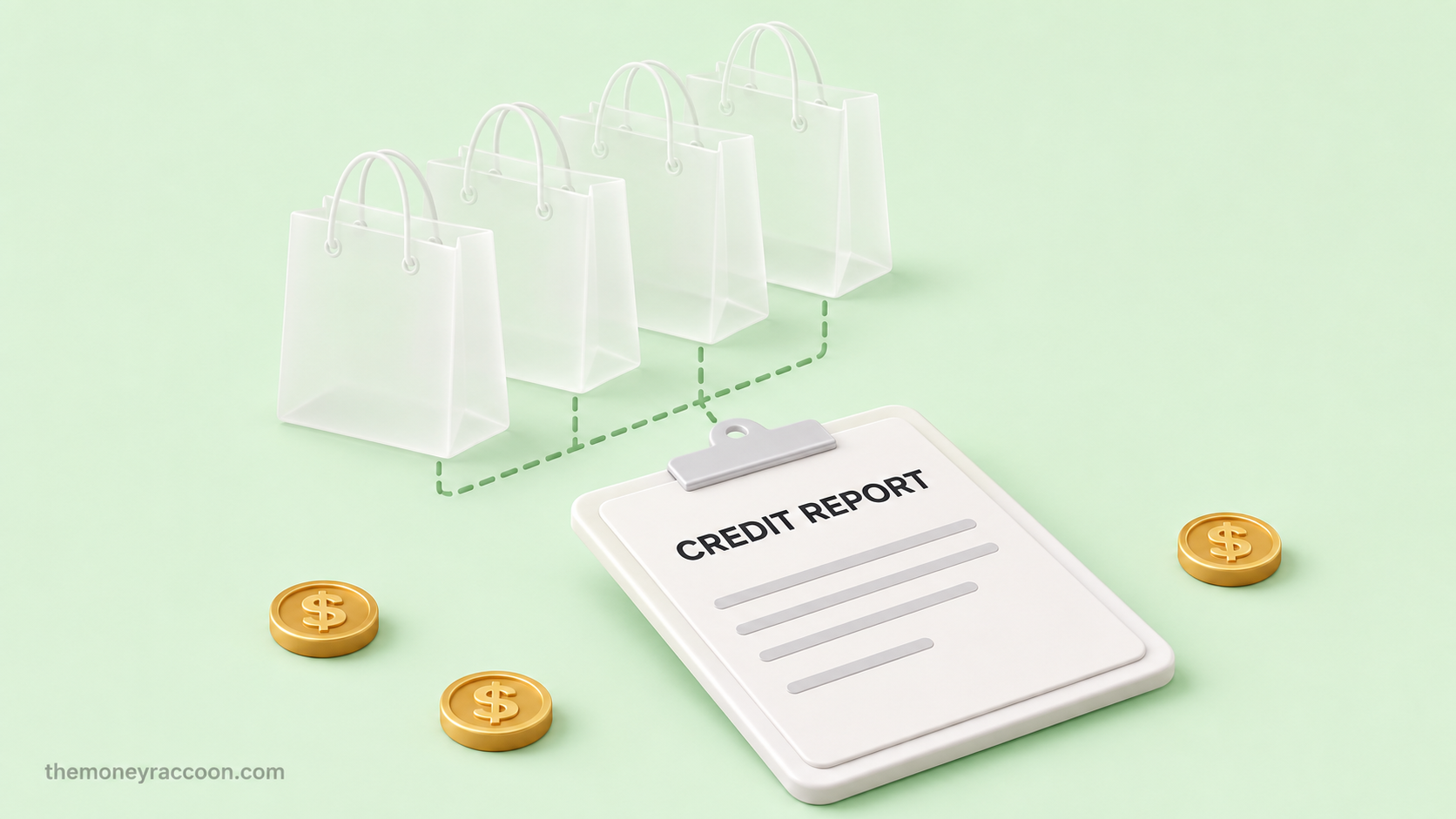
Phantom debt is money you genuinely owe that almost nobody can see — not your lender, not the credit bureaus, and often not even you, until four apps want payment in the same week.
It’s the shadow side of buy now, pay later. Outstanding BNPL balances now exceed $400 billion, most of it invisible to credit bureaus, spread across roughly 91.5 million US users.
And the stress is showing: 54% of BNPL users have missed a payment, and 60% have juggled multiple BNPL loans at once. The Richmond Fed flagged the phenomenon as a systemic blind spot in 2026 — when a mortgage lender pulls your credit report, hundreds of dollars in monthly BNPL obligations simply don’t appear.
The spiral is easy to fall into precisely because each individual purchase feels small and painless. This guide shows exactly how the trap closes, why it’s about to become visible (that part changes everything), and the step-by-step escape route if you’re already juggling.
Bottom line first: Phantom debt is debt that doesn’t show up on your credit report — most commonly buy now, pay later balances. Over $400 billion is outstanding in the US, largely invisible to credit bureaus, which means lenders can’t see it and borrowers underestimate it. The danger: it’s real money with real due dates and real late fees, and it’s rapidly becoming visible as FICO begins scoring BNPL and providers like Affirm report to the bureaus. Fix it by listing every plan, killing the smallest first, and pausing new BNPL until you’re clear.
How the Phantom Debt Spiral Closes
Nobody signs up for a debt spiral. Here’s the sequence that produces one anyway:
Step 1 — The purchase doesn’t feel like borrowing. “$200” becomes “4 payments of $50” at checkout. Your brain prices the payment, not the item. Research on BNPL consistently finds it increases both purchase frequency and basket size — that’s the product working as designed.
Step 2 — The plans stack invisibly. Each app tracks only its own loans. Four purchases across four providers means four separate schedules, four due dates, and no single screen showing the total. With 60% of users holding multiple loans at once, most people genuinely don’t know their number.
Step 3 — The payment calendar collides. Installments hit on their own cycles, not your payday. One tight week produces the first missed payment — which 54% of users have already experienced — and late fees start where the “interest-free” pitch ended.
Step 4 — Cards cover BNPL. The most dangerous step: paying installments with a credit card converts 0% short-term debt into 22% revolving debt. The phantom becomes permanent, and now it’s expensive.
Step 5 — The invisible debt blocks the visible loan. Applying for a mortgage or car loan, your report looks clean — but your bank account is committed hundreds of dollars a month. Some applicants get approved for payments they truly can’t carry; others fail the underwriter’s bank-statement review for reasons that seem to come out of nowhere.
Phantom Debt Is About to Become Visible
The blind spot is closing — and this is the single most important development for anyone carrying BNPL balances.
| Yesterday | Now (2026) | |
|---|---|---|
| On your credit report | Mostly absent | Affirm reporting since fall 2025; others following |
| In your FICO score | Ignored | FICO now scores BNPL in newer models |
| Visible to lenders | No | Increasingly yes (report + bank statements) |
| Late payments | Fees only | Fees + potential credit damage |
| Regulator attention | Minimal | Richmond Fed flagged systemic risk in 2026 |
What this flips: for years, the only consequences of BNPL trouble were fees and app-level restrictions. As reporting spreads, the same missed payment can now hit your score — and, being small-dollar and easy to forget, BNPL delinquencies are especially good at doing damage quietly.
There’s an upside worth naming: reported on-time BNPL payments can start helping thin credit files. The full breakdown of how BNPL affects your credit score is here — the short version is that the same visibility that punishes misses can reward consistency.
The Escape Plan (5 Steps)
Step 1 — Make the phantom visible. Open every BNPL app you’ve ever used — Klarna, Afterpay, Affirm, PayPal Pay in 4, Zip, plus any store-checkout plans — and write down every open plan: provider, remaining balance, payment amount, due dates. One page, one total. This step alone is the whole trick: phantom debt survives on not being counted.
Step 2 — Put every due date on one calendar. Set reminders 2 days before each hit. Most BNPL damage is timing, not affordability — the money existed, it just wasn’t there on Tuesday.
Step 3 — Kill the smallest plan first. Small balances close fast, and each closed plan removes a due date from the calendar permanently. Fewer moving parts beats optimal interest math here, because BNPL’s danger is complexity, not rate. The snowball logic in full is here.
Step 4 — Freeze new BNPL until you’re at zero. Delete saved payment methods and remove the apps from your phone’s home screen. This is a hard pause, not a lifestyle change — and it’s non-negotiable, because you can’t drain a tub with the tap running.
Step 5 — Rebuild the spending habit that created it. BNPL thrives on decisions made at checkout, in the moment. A pre-decided spending system fixes that upstream: the cash envelope system makes the money finite before the checkout screen appears. If any of this has already spilled onto credit cards, handle that balance directly — it’s now the expensive part.
(Educational content, not financial advice.)
When BNPL Is Actually Fine
This isn’t a “never use it” article. Used narrowly, BNPL is a reasonable tool:
One plan at a time, on something planned. A single installment plan on a budgeted purchase — a mattress, a repair — is fine when the payments are already accounted for.
Only if the payments fit the month they land in. The correct question is never “can I afford $50?” It’s “can I afford all four payments alongside everything else that hits those weeks?”
Never for essentials or emergencies. Rising BNPL use for groceries and utilities is the clearest distress signal in the data. If installments are covering food, the problem isn’t the payment plan — it’s a cash-flow gap that installments will deepen, not close.
Never stacked. The moment there are two plans, the counting problem starts. Two becomes four faster than anyone expects, and four is where the phantom stops being manageable.
FAQ: Phantom Debt
- What is phantom debt? Phantom debt is real debt that doesn’t appear on your credit report — most commonly buy now, pay later balances. Over $400 billion is outstanding in the US, largely invisible to credit bureaus. It’s “phantom” only in visibility: the payments, due dates and late fees are entirely real.
- Does BNPL show up on your credit report? Increasingly yes. Historically most BNPL sat outside the credit system, but Affirm began reporting in fall 2025, FICO now scores BNPL in newer models, and other providers face mounting pressure to follow. Assume anything you take on now will eventually be visible.
- Why is phantom debt dangerous? Three reasons: you can’t manage what you don’t count, lenders approve you for loans you can’t actually carry because your true obligations are hidden, and small forgotten installments generate late fees — and now potential credit damage. Over half of BNPL users have already missed a payment.
- How do I get out of BNPL debt? List every open plan across every app on one page with balances and due dates, put all due dates on one calendar with reminders, pay off the smallest plans first to remove due dates, freeze all new BNPL until you’re at zero, and never pay installments with a credit card — that converts free short-term debt into 22% revolving debt.
- Can phantom debt hurt my credit score? It can now, and increasingly will. As BNPL reporting expands, missed installments can appear as delinquencies like any other loan, and on-time payments can help thin files. Even unreported, BNPL can hurt indirectly — lenders reviewing bank statements see the outflows, and missed payments can be sold to collections.
References: American Default — Phantom debt: the $400 billion credit bureaus can’t see, Richmond Fed — Buy now, pay later: recent developments and implications, Chargeflow — BNPL statistics 2026, DontPayFull — Buy now, pay later statistics 2026. Educational content, not financial advice.

Personal finance writer, founder and editor of The Money Raccoon — 5 years in the industry and 1,000+ articles published in the finance niche. I turn complex money rules — credit scores, debt, banking and investing — into plain-English guides backed by primary sources and real numbers. Every guide here is fact-checked against the institutions that publish the data and updated when the numbers change.